
While some such as Hindalco, JSW Steel, India Cements, Essar Oil, Tata Steel and Jet Airways have already announced plans to raise a combined Rs 70,000 crore, there are many who are redrawing proposals to enter the market to raise money.

The government on Monday decided to deallocate one more mine - Gourangdih ABC-- jointly given to JSW Steel and Himachal Emerging Markets Trade Association besides deduction of bank guarantees of two allottees for failing to develop mines within time.

Metal and mining companies, such as Tata Steel, JSW Steel, Hindalco, and Coal India, have been among the top-performing sectors on the bourses in recent months. The S&P BSE Metal Index is up 13 per cent in the past three months, rallying 29 per cent in the past year, outperforming the broader market. For comparison, the benchmark S&P BSE Sensex has only seen a 1.7 per cent increase in the past three months, with a 15 per cent gain since the end of September last year.
It is not the lack of skills and poor education institutes, but the lack of passion to learn and poor choices that is holding India's young grads back.

JSW Energy aims to generate 11,390 Mw in the country by 2015. The company has tied up with two consortiums of lenders, led by IDBI Bank and State Bank of India, respectively, for the loans. It had recently filed a draft red-herring prospectus for a Rs 3,000 crore (Rs 30 billion) public offering with market regulator Securities and Exchange Board of India.
ArcelorMittal, Anglo Australian major Rio Tinto, Hyderabad-based GVK Power & Infrastructure, Essar Mineral Resources and JSW Steel are among 10 prominent corporations in a shortlist to develop 18 abandoned coal mines owned by state-owned Coal India Ltd and its eight subsidiaries.
Experts say that until the market bounces back to a respectable level and creates confidence among investors, who could look forward to some price appreciation, IPOs will not be successful.

M&M was the biggest loser in the Sensex chart, falling 6.39 per cent, followed by Tech Mahindra, Nestle India, Bajaj Finance, Axis Bank, ITC, JSW Steel, HDFC Bank and RIL. On the other hand, Sun Pharma, Tata Motors, Bharti Airtel, L&T and Infosys were among the winners, rising up to 2.10 per cent.
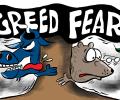
Domestic stock markets would be driven by inflation numbers, global trends, and the last batch of Q4 earnings this week, analysts said. Markets will also react to industrial production data and consumer inflation numbers that were released after market hours on Friday. "Participants will react to macroeconomic data viz. IIP and CPI first, which were released post-market hours on Friday.
The Nifty gained 32 points to close at 3,210.
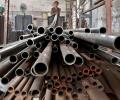
Given wild swings, investors are wondering where the metal market is going. There was a strong uptrend in industrial metal through much of the last three years due to fears of supply chain issues - first due to Covid-19 and then due to the Ukraine War. That uptrend broke down as it became apparent that global growth would moderate as inflation rose and Western Europe (the EU plus the UK) went into a near-recession and China was in a rolling lockdown.

A little over a year before, when the Hajigak iron ore deposit was put up for grabs, at least five companies - Essar Minerals, JSW Steel, Rashtriya Ispat Nigam, Sesa Goa and Ispat Industries - had evinced interest.
Noting that Indian firms face a high risk of mark-to-market losses due to a volatile forex market, a brokerage firm has named telecom major Reliance Communications and auto giant Tata Motors among five blue-chip companies estimated to have suffered the most during 2008-09.

Tata Sons chairman Natarajan Chandrasekaran was paid Rs. 113 crore as remuneration for 2022-23 (FY23), including Rs. 100 crore as commission on profit. Chandrasekaran, 60, often referred to as Chandra, received a remuneration of Rs. 109 crore in 2021-22 (FY22). With this, Chandra has emerged as one of the highest-paid chief executive officers (CEO) in Corporate India for FY23.

Among the Sensex firms, Larsen & Toubro, UltraTech Cement, JSW Steel, Titan, Bajaj Finance, Wipro, Tech Mahindra and Nestle were the major laggards. Maruti, Power Grid, Axis Bank, State Bank of India, NTPC, HDFC Bank, ITC and IndusInd Bank were the gainers.
During the first eight months of CY24, 50 IPOs mobilised Rs 53,453 crore.
Sajjan Jindal, vice-chairman and managing director of JSW Steel and one of West Bengal's most valued investors, said that he would have compensated unwilling farmers with double the land 800 acres next door in return for land for the Tata Motors factory at Singur.
With high investment levels fuelling much of the current GDP growth, the impact of the credit squeeze is more than a matter of academic interest.
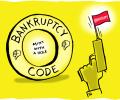
In a major relief to stressed assets, the Cabinet approved the proposed IBC amendment that the licences, permits, concessions, and clearances for a corporate debtor cannot be terminated or suspended or not renewed during the moratorium period. The Cabinet also allowed amending the code to streamline the corporate insolvency resolution process and protect last-mile funding to boost investment in financially distressed sectors.
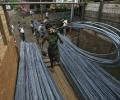
The country imported 9.31 million tonnes (mt) of steel in FY15.
With Housing Development Finance Corporation's (HDFC's) merger with HDFC Bank becoming effective on July 1, the merged entity is set to become the top weight in the benchmarks S&P BSE Sensex and the National Stock Exchange Nifty indices, dislodging the country's most valuable company, Reliance Industries (RIL), from its perch. HDFC will stop trading after July 13. At present, RIL has a weighting of close to 12 per cent in the Sensex and 10.3 per cent in the broad-based Nifty. Meanwhile, HDFC Bank and HDFC have weights of 9.9 per cent and 6.8 per cent in the Sensex and 8.8 per cent and 6 per cent in the Nifty, respectively.
Some of the top indebted companies likely to face financial headwinds in the coming quarters include NTPC, PowerGrid, Tata Steel, Adani Power, JSW Steel, UPL, and Steel Authority of India. Together these 201 companies owed Rs 14.9 trillion to their lenders at the end of September 30, 2019, up 4.1 per cent year-on-year (YoY) during the first half of FY20.

The stock market's momentum will be guided by the ongoing quarterly earnings season, with Reliance Industries, HUL and Bajaj Finance among those scheduled to announce their results this week, analysts said. Focus would also remain on the COVID situation, global stock markets, investment pattern of foreign institutional investors (FIIs), rupee-dollar trend and Brent crude, they added. "The earnings season would gain pace this week and participants will be closely eyeing the results of some of the top names like Reliance, Ultratech Cement, Bajaj Auto, JSW Steel, Bajaj Finance, Asian Paints, Hindustan Unilever among others. "Before that, markets will first react to the earnings of two heavyweights -- HCL Technologies and HDFC Bank in early trade on Monday," said Ajit Mishra, VP Research, Religare Broking.
The trading firm is under pressure from lenders to raise funds.

RIL, Essar, Adani have sounded bankers to raise funds abroad in the coming weeks

Notwithstanding expectations of a pick-up in construction activity during a seasonally strong January-March quarter (fourth quarter) of 2022-23 (FY23), analysts are cautiously optimistic about the building material sector - encompassing paints, pipes, wood panels, tiles, metals, and cement - as volatile input costs, coupled with fears of a global slowdown, are making demand projections uncertain. Against this backdrop, analysts suggest investors stay selective and pick stocks of companies with stronger brand recall, expanding distribution network, diversified product profile, healthier balance sheet, and sustainable cash flow. "The government's various proposals under Budget 2023-24 (FY24) may lead to the building material segment growing between 8 per cent and 12 per cent for the next five years.

India's top listed companies reported their best-ever quarterly net profit of Rs 2.39 trillion in the September quarter of FY22, up 46.4 per cent year-on-year. The earnings were driven by a big surge in the profitability of banks, non-banking financial companies & insurance (BFSI), oil & gas, and metal & mining firms. The combined net profit of these three cyclical sectors were up 87 per cent YoY to a record high of Rs 1.53 trillion, up from Rs 82,000 crore a year ago and Rs 1.08 trillion in Q1FY22.

The Q1FY24 earnings season has started on a dismal note for corporate India. The early-bird companies' revenue growth has been at a 10-quarter low, while the combined earnings of non-BFSI (banking, financial services, and insurance) companies seem to have hit the ceiling. The numbers suggest corporate India is entirely dependent on BFSI companies and the IT services sector to drive growth in revenue and profit while other sectors are showing signs of stagnation.

Despite the wobble in the markets over the past few weeks, Indian equities remain expensive as measured by several yardsticks. India's market capitalisation-to-GDP ratio, for instance, has touched a multi-year high. The ratio is currently at 116 per cent, based on the FY22E gross domestic product (GDP) number, above its long-term average of 79 per cent.
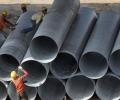
Once Bhushan Steel is into its fold, Tata Steel will increase its capacity from 12.7 million tonnes per annum (mtpa) to 18.3 mtpa
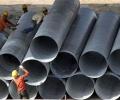
Industry demands the basic customs duty on all steel imports to be raised to 25%

When the world was upended by the Covid-19 pandemic, metals got its shine back. In the last two years, infrastructure spending by major economies spurred demand, energy transition and intermittent supply disruptions fuelled a scorching rally in metals after a downturn during the first Covid wave. Now, Russia's war on Ukraine is ensuring that elevated prices stay the course.

Many CEOs said they plan to give special leave to women employees so as to encourage their participation in the workforce.

The first quarter earnings season will dictate the trend in the equity markets in this holiday-shortened week amid absence of major macroeconomic drivers, say analysts. Besides, lacklustre global markets may increase volatility in the market, they added. Equity markets would remain closed on Wednesday for Bakri-Id.

They are snapping up ore and coal abroad, as their availability is stuck at home.
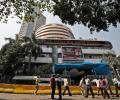
Benchmark share indices ended flat amid lack of investor participation even as gains in IT majors ahead of their second quarter earnings helped capped downside.

'He just has to keep performing, and mustn't let this go to his head.'
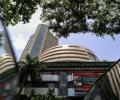
The NSE 50-share index, after moving between 10,572.20 and 10,546.20, ended at 10,565.30, up 39.10 points, or 0.37 per cent.

Gains were led by HUL on better-than-expected margins in March quarter and capital goods shares.
West Bengal, which has seen many violent protests against land acquisition in the country, is now set to get another exemplary rehabilitation package for land-losers. After the free shares by JSW Bengal Steel, now Bhushan Steel is going one step ahead to give free land to land-losers as a part of its rehabilitation and resettlement (R&R) package. Sources said the R&R package has been submitted to the West Bengal Industrial Development Corporation (WBIDC).
